Understand why your child does what they do. Then have a plan that works.
A course for parents and carers of children from birth to 18. Short lessons you can do on your phone, each ending in one thing to try at home tonight.
- 15 core modules
- 7 special topics
- 109 lessons, each with read-aloud audio
- 20 printables
- 621 named sources
See a real lesson
These are screenshots of the course as it is, not mock-ups. The free taster lets you try a whole lesson before you pay anything.
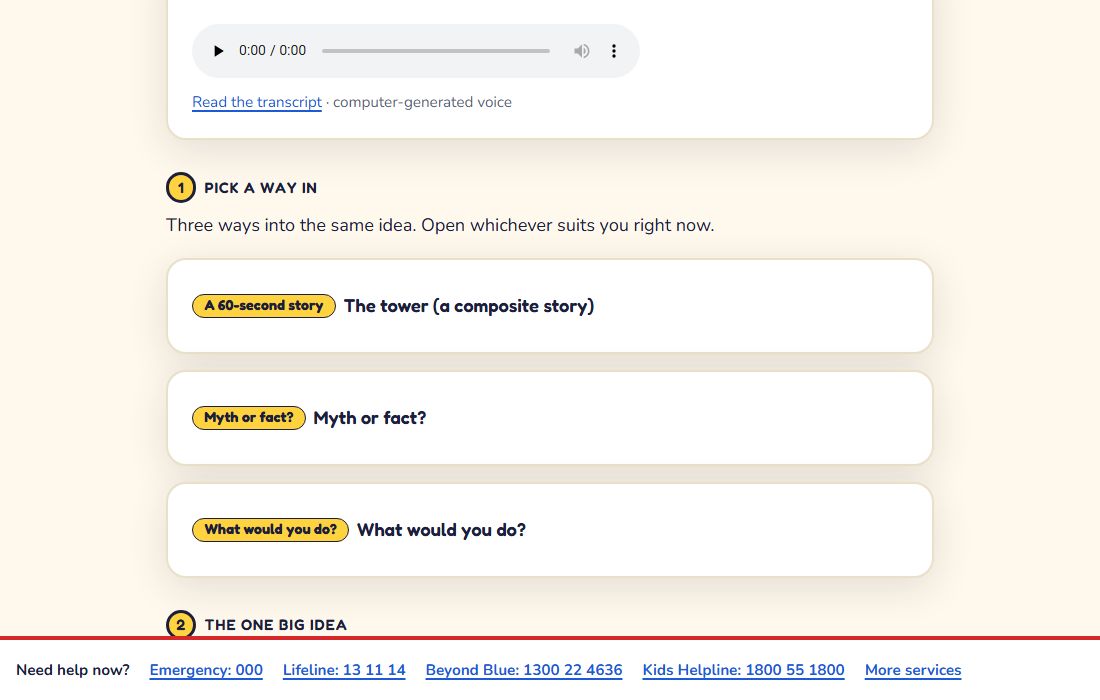
Every lesson has read-aloud audio and a transcript, and three ways in: pick whichever suits you tonight.
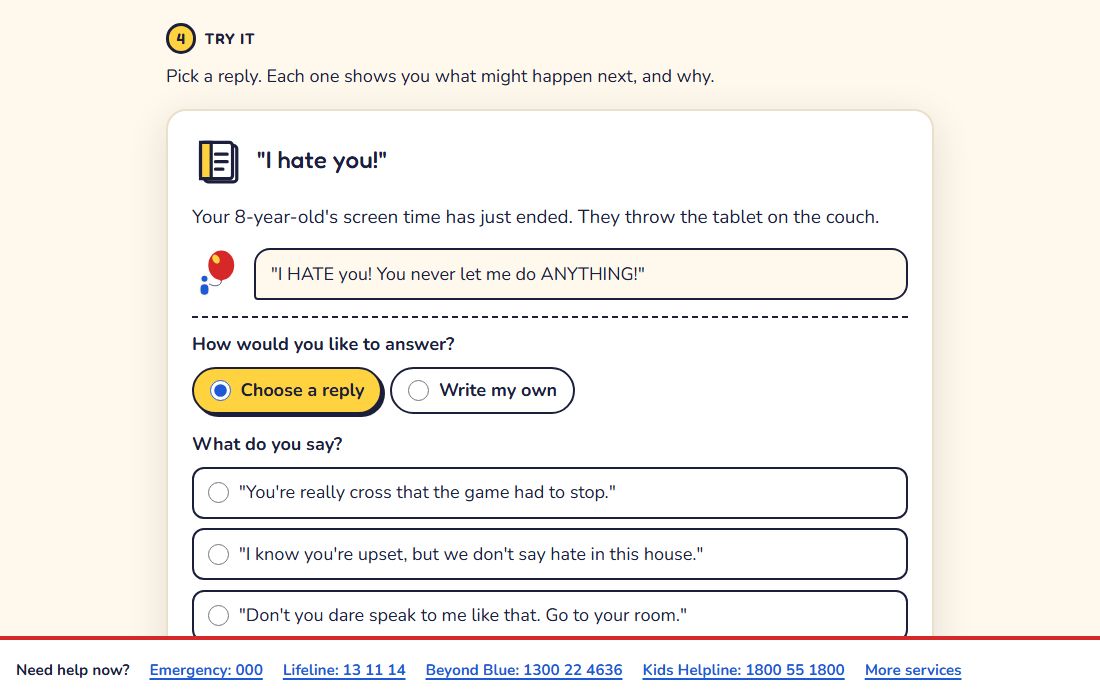
Short exercises with two ways to answer, and feedback that explains why.
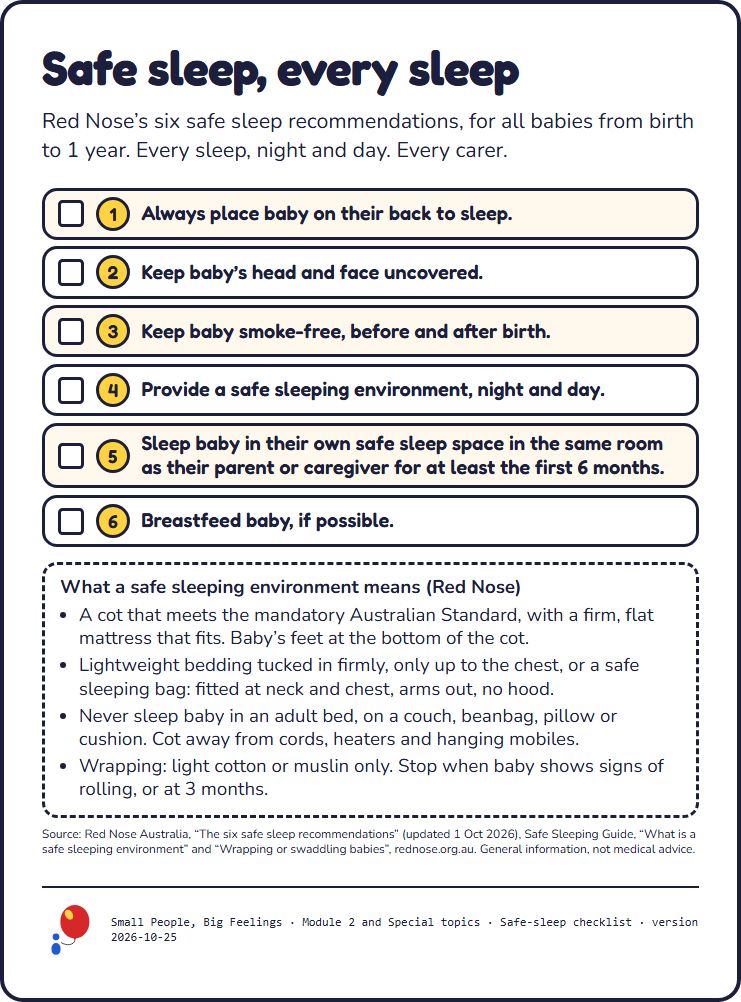
Twenty fridge-sized printables, readable across the kitchen and fine in black and white.
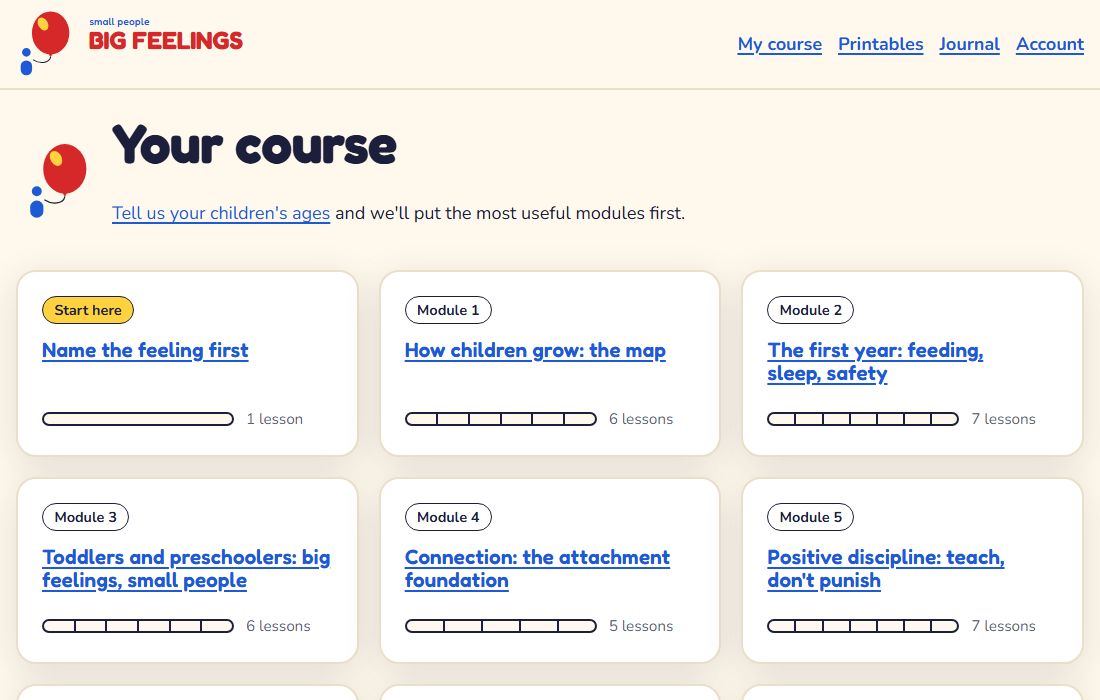
Tell it your children's ages and the most useful modules come first. Nothing is hidden.
How each lesson works
- Pick a way in: a short story, a myth-or-fact round, or "what would you do?".
- One big idea, with the best study behind it named, and its honest limit.
- See it: a short worked example, a parent and child talking it through.
- Try it: an exercise, then a version for your own child's age, saved privately.
- Check: three quick questions; anything you miss comes back later.
- Tonight: one thing to try in the next 24 hours.
Lessons take 12 to 20 minutes. Come back after a break and you'll see "welcome back", never a lost streak.
Built on named sources, honestly
Every claim about children names its source, and every source carries a label that says how strong it is. A single study is never dressed up as settled fact, and a practitioner's book is never used as evidence.
- A Guideline or review
- B One strong study
- C Classic theory
- D A practitioner's approach
Where studies disagree (screen time, time-out, rewards, sleep training, growth mindset), the lesson shows both readings and says so. Where there's no good study, it says that too.
What's inside
Start with the free taster. Then follow the order for your youngest child, or go straight to what you need.
Module 1: How children grow: the map (6 lessons)
- What development is (and isn't)
- The four strands: body, thinking, feelings, social
- Milestones are ranges, not deadlines
- The brain under construction
- Temperament: the child you got
- When to ask for help
Module 2: The first year: feeding, sleep, safety (7 lessons)
- Breastfeeding: getting started, and when it hurts
- Formula and mixed feeding, without the guilt
- Starting solids and allergens
- Safe sleep, every sleep
- Newborn sleep: what's normal
- Crying, settling and your own limits
- Postnatal mental health, for both parents
Module 3: Toddlers and preschoolers: big feelings, small people (6 lessons)
- Why toddlers melt down
- Tantrum first aid
- The language explosion, and how to feed it
- Play is the work
- Toilet learning
- Sharing, biting, hitting: what's normal
Module 4: Connection: the attachment foundation (5 lessons)
- What secure attachment is (and isn't)
- Serve and return in five minutes a day
- Repair after rupture
- Special time
- Connection with teens looks different
Module 5: Positive discipline: teach, don't punish (7 lessons)
- Why punishment underperforms
- Kind and firm at the same time
- Natural and logical consequences
- Time-in, time-out, and what the evidence says
- Routines that remove the fight
- Rewards: when they help and when they backfire
- Repair and family meetings
Module 6: Talking so kids listen (and listening so they talk) (7 lessons)
- Describe, don't judge
- Name the feeling first, at every age
- Instructions that land
- Questions that open
- Praise that helps and praise that hurts
- Hard conversations: death and frightening news
- Hard conversations: bodies, sex and separation
Module 7: Emotional intelligence and mental health (6 lessons)
- Lend your calm: co-regulation before self-regulation
- Emotion coaching in five steps
- Anxiety: the worry cycle, and how to step out of it
- Anger: theirs and yours
- Mistakes and bouncing back: guilt, shame and resilience
- Signs that need a professional, and who to call
Module 8: Healthy family dynamics (6 lessons)
- Trust and respect run both ways
- When the grown-ups disagree
- Co-parenting across two homes
- Siblings: rivalry, fairness, fighting
- Grandparents and the village
- Family values, said out loud
Module 9: Life skills by age (6 lessons)
- Why chores and independence matter
- The skills ladder, from 2 to 18
- Money: pocket money and the first job
- Cooking, cleaning and the kitchen
- Getting around and letting go safely
- Executive function: planning, time and organisation
Module 10: Screens, media and online safety (6 lessons)
- What the research does and doesn't show
- The 5 Cs and a family media plan that sticks
- Games, YouTube and the attention economy
- Online safety and grooming: the signs
- Social media and teens
- Your own phone
Module 11: Food, sleep and movement (5 lessons)
- Your job, their job: sharing out the feeding
- Fussy eating without a fight
- Sleep by age and the bedtime routine
- Movement and outdoor time
- Body talk: raising kids who like their bodies
Module 12: School, learning and motivation (6 lessons)
- Reading aloud from day one
- Growth mindset, honestly stated
- Homework: how much to help
- Boredom and curiosity
- Working with teachers
- Learning differences: the first steps
Module 13: Friends, bullying and the social world (6 lessons)
- How friendship grows
- Shyness and social skills
- When your child is bullied
- When your child bullies, and when they're standing by
- Peer pressure, both ways
- Empathy and kindness that sticks
Module 14: Tweens and teens (5 lessons)
- Puberty: what to say and when
- Risk, independence and the teen brain
- Sex, consent and relationships
- Alcohol, drugs and vaping
- Pulling away or struggling? Mental health in the teen years
Module 15: Looking after the parent (5 lessons)
- Running on empty: parental burnout
- Guilt and the good-enough parent
- Asking for help (and saying yes to it)
- The parent you had and the parent you are
- Keeping yourself in the picture: your minimums
Special topics
Shorter topics for particular times.
Neurodivergence: ADHD, autism and the first steps (3 lessons)
- What ADHD and autism are
- If you're wondering: the first steps
- Everyday supports at home
A new baby in the family (3 lessons)
- Getting your older child ready
- The first weeks: jealousy, going backwards and gentle hands
- Your load, too
Grief and loss (3 lessons)
- How children grieve, age by age
- The weeks and months after
- When you're grieving too
Moving house or school (3 lessons)
- Before the move, and the day itself
- A new school, new friends
- When it isn't settling
Serious illness in the family (3 lessons)
- Telling children the truth, simply
- Keeping life going: routines, hospital visits and siblings
- The caring parent's load
Twins and multiples (2 lessons)
- The early months with twins (or more)
- Each one their own: individuality and fairness
Blended families (3 lessons)
- The first years together: slowly does it
- The step-parent's role: warmth first, rules second
- Step-siblings, half-siblings and the other home
Safe, private, and clear about its limits
- It explains; it doesn't prescribe. Lessons on feeding, sleep, illness and mental health say when to see your doctor, a child health nurse or a paediatrician, and list the signs that mean "get help now". This course is not medical advice.
- Help is always one tap away. The modules on babies, feelings, teens and your own wellbeing keep crisis numbers on every page, and who to call lists help lines for your country, with their hours.
- Your notes are yours. Your journal is private: nobody reads it and nobody is told what you write. You can delete your account, and everything in it, at any time. Privacy.
Questions
- What ages is it for?
- Birth to 18. Tell it your children's birth months and the most useful modules come first; everything else is still there.
- How long does it take?
- Each lesson is 12 to 20 minutes. There's no timetable: do one a night, or one a month.
- Do I need to read it all?
- No. Every lesson has read-aloud audio and a transcript, and the exercises work by touch, mouse or keyboard.
- What does it cost?
- A$149, once, for lifetime access. Checkout can show the price in your own currency. The taster is free.
- Where is it for?
- Parents anywhere. It's written for families in the US, the UK and Australia, and works wherever you are. The help page shows services for your country.
Start with 20 minutes, free
The taster teaches one skill you can use tonight, and shows you exactly what the course is like.